Intent
Anchor: what you are trying to accomplish and which purpose governs the response
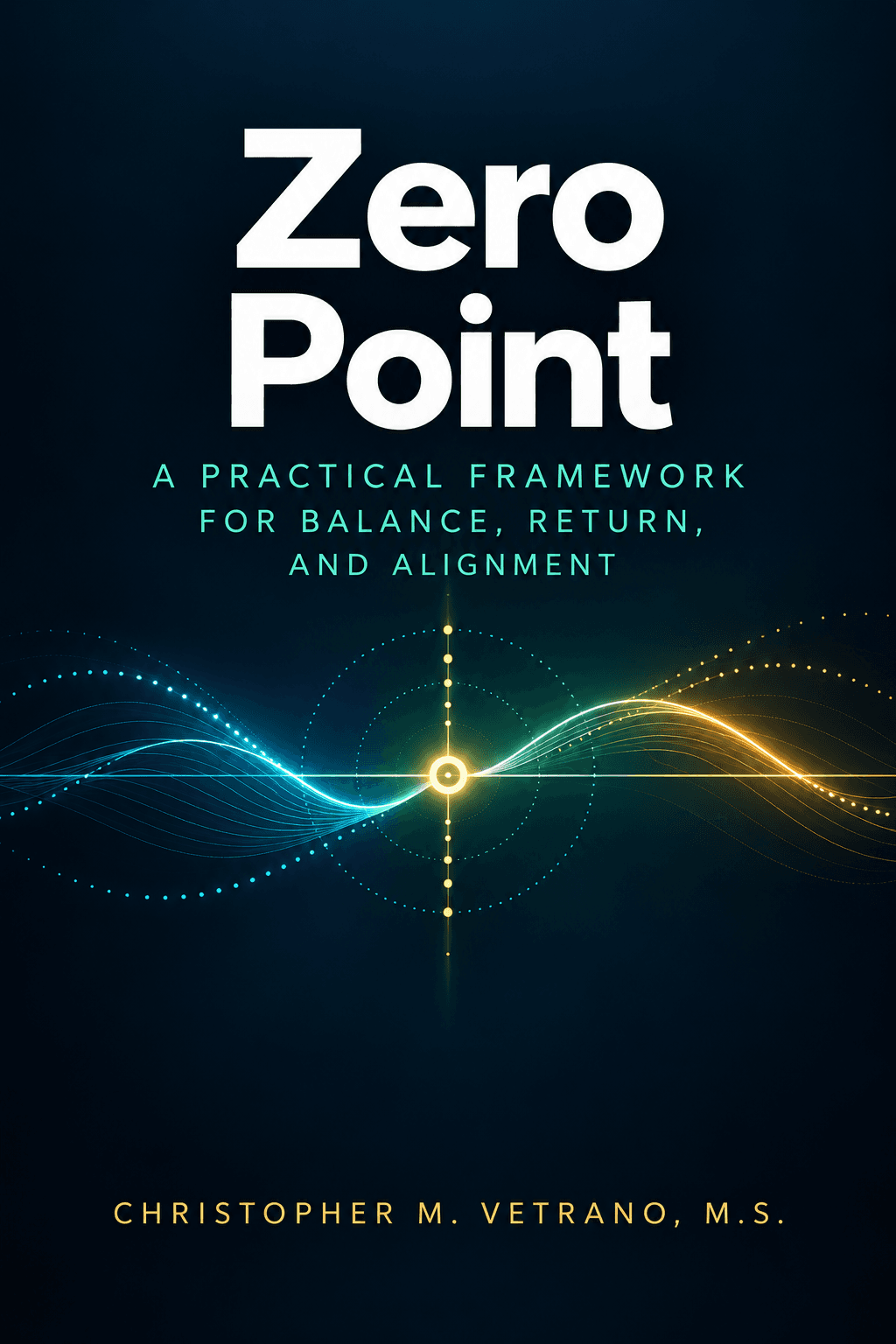
A Practical Framework for Balance, Return, and Alignment
Explore the gap between what you meant to do and what happened. Work with familiar situations, question your interpretation, and examine what your next response changes.
The manuscript is complete and being prepared for publication. Publication details will be announced here.
Get publication updatesThree anchors help examine the situation: intent, behavior, and environment. Two observations describe movement: amplitude and return time. Alignment checks whether the response addresses reality, preserves meaningful choice, and avoids unnecessary harm.
Anchor: what you are trying to accomplish and which purpose governs the response
Anchor: what you actually do and what follows from it
Anchor: the conditions that make a response easier or harder
Observation: how strongly the system moves, without treating intensity as a verdict
Observation: how long it takes for assessment and useful choice to become available again
Outcome check: reality, meaningful choice, and unnecessary harm
A smaller reaction or faster return is useful only in relation to the action and its consequences. Strong feelings can remain while a person assesses the situation and responds usefully.
You do not have to put your whole life in order before taking one honest step.
This book has one aim: to help you hold center in a noisy world. You may know what matters to you and still find yourself agreeing when you meant to refuse, carrying an argument long after it ended, or spending an evening measuring your life against someone else's. By the time you notice, the day has gone somewhere you did not intend.
Zero Point begins there, with the gap between what you meant to do and what happened. It asks you to look at the reaction, the purpose behind your response, and the conditions that made one choice easier than another.
The framework behind Zero Point has been in development since 1992. It did not start as an app or a book. It started as a way of making sense of personal experience, repeated pattern observations, and work across behavioral and physical wellness settings over more than thirty years.
This book is the full written form of that work. It is not a product manual or a companion guide. It is the wider, slower-moving version of the same framework the app expresses in real time.
About the founder →